


Category:Prasadam: Difference between revisions
Visnu Murti (talk | contribs) No edit summary |
No edit summary |
||
| (2 intermediate revisions by 2 users not shown) | |||
| Line 1: | Line 1: | ||
prasadam | | '''Theme Analysis''' | ||
[[File:Prasadam_plate.jpg|208px|center|alt=Prasadam|link=]] | |||
The culture of honoring and distributing prasadam stands as a central pillar in the practice of Krsna consciousness, representing the causeless mercy of the Lord extended to all living entities. Srila Prabhupada elucidates that food offered to the Supreme Personality of Godhead with love and devotion transforms from material substance into transcendental mercy, capable of purifying the senses and curing the disease of material existence. Whether one is a learned scholar or a simple animal, partaking in these sanctified remnants awakens dormant spiritual consciousness. The distribution of prasadam is not merely a social welfare activity but a profound spiritual engagement that satisfies the self and liberates others from the cycle of birth and death. | |||
* '''Transcendental Nature of Prasadam:''' Prasadam is distinct from ordinary food; it is spiritual, absolute, and non-different from Krsna. It is immune to material contamination and retains its purity even under apparent external defects, transcending dualities of touchable and untouchable. | |||
* '''Purification of the Senses:''' The path of self-realization begins with controlling the tongue, which is most easily achieved by honoring prasadam. This spiritual diet, combined with the medicine of the Holy Name, acts as the cure for the material disease, regulating the urges of the belly and genitals. | |||
* '''Compassionate Distribution:''' A devotee exhibits compassion by distributing prasadam to everyone, from learned brahmanas to the lowest classes of men and even animals. This act is the practical application of spiritual communism, acknowledging that everything belongs to the Lord and should be offered to Him before use. | |||
* '''Etiquette and Devotional Service:''' Honoring prasadam is a form of service (seva), not sense enjoyment. It requires specific etiquette, such as cleanliness and reverence, yet the imperative to accept the Lord's mercy supersedes rigid rules of time and place, as prasadam should be honored immediately upon receipt. | |||
* Explore the synthesized essence of this category in this Vanipedia article: [[Vanipedia:Significance of Honoring and Distributing Prasādam|Significance of Honoring and Distributing Prasādam.]] | |||
---- | |||
[[Category:Offering Food to Krsna]] | |||
[[Category:Mercy]] | |||
[[Category:Food]] | |||
[[Category:Categories With Theme Analysis]] | |||
[[Category:Sanskrit Terms]] | |||
[[Category:Nutrition and Health - Umbrella Category]] | |||
[[Category:Mercy, Compassion and Forgiveness - Umbrella Category]] | |||
[[Category:All Categories - Vaniquotes]] | |||
Latest revision as of 06:13, 31 December 2025
Theme Analysis
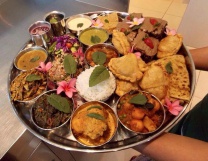
The culture of honoring and distributing prasadam stands as a central pillar in the practice of Krsna consciousness, representing the causeless mercy of the Lord extended to all living entities. Srila Prabhupada elucidates that food offered to the Supreme Personality of Godhead with love and devotion transforms from material substance into transcendental mercy, capable of purifying the senses and curing the disease of material existence. Whether one is a learned scholar or a simple animal, partaking in these sanctified remnants awakens dormant spiritual consciousness. The distribution of prasadam is not merely a social welfare activity but a profound spiritual engagement that satisfies the self and liberates others from the cycle of birth and death.
- Transcendental Nature of Prasadam: Prasadam is distinct from ordinary food; it is spiritual, absolute, and non-different from Krsna. It is immune to material contamination and retains its purity even under apparent external defects, transcending dualities of touchable and untouchable.
- Purification of the Senses: The path of self-realization begins with controlling the tongue, which is most easily achieved by honoring prasadam. This spiritual diet, combined with the medicine of the Holy Name, acts as the cure for the material disease, regulating the urges of the belly and genitals.
- Compassionate Distribution: A devotee exhibits compassion by distributing prasadam to everyone, from learned brahmanas to the lowest classes of men and even animals. This act is the practical application of spiritual communism, acknowledging that everything belongs to the Lord and should be offered to Him before use.
- Etiquette and Devotional Service: Honoring prasadam is a form of service (seva), not sense enjoyment. It requires specific etiquette, such as cleanliness and reverence, yet the imperative to accept the Lord's mercy supersedes rigid rules of time and place, as prasadam should be honored immediately upon receipt.
- Explore the synthesized essence of this category in this Vanipedia article: Significance of Honoring and Distributing Prasādam.
Subcategories
This category has the following 31 subcategories, out of 31 total.
B
C
E
G
I
K
L
M
N
P
Q
R
S
T
Pages in category "Prasadam"
The following 357 pages are in this category, out of 357 total.
2
9
A
- A brahmacari should accept prasada upon the order of the spiritual master, and if the spiritual master sometimes forgets to order the disciple to eat, the disciple should not take prasada on his own initiative; rather, he should fast
- A devotee eats only prasada, or foodstuffs offered to the Supreme Lord, and Krsna says that when a devotee offers Him foodstuffs from the vegetable kingdom, with devotion, He eats that
- A devotee even wishes to benefit cats and dogs by giving them prasada. Once, when devotees from Bengal were going to see Caitanya Mahaprabhu, a dog began to follow them, and the leader of the party, Sivananda Sena, was giving prasada to the dog
- A devotee should worship the Supreme Lord, be friendly to persons who are on the same level and be compassionate to the ignorant. One should exhibit his compassion for ignorant living entities by distributing prasada
- A diseased person needs both proper medicine and a proper diet, and therefore the Krsna consciousness movement supplies materially stricken people with the medicine of the chanting of the holy name, or the Hare Krsna maha-mantra, and the diet of prasadam
- A householder should lead such a life that he gets full opportunity to hear and chant. He should worship the Deity at home, observe festivals, invite friends in and give them prasada. A householder should earn money for this purpose
- A man may question, "How it has become prasadam? It is bhata, rice." No. Because it is offered to Krsna, therefore it has changed its quality from inferior to superior
- A person who honors the prasadam and regularly eats it, not exactly in front of the Deity, along with caranamrtam immediately can achieve the results of pious activities which are obtained through ten thousand performances of sacrificial rites
- A sannyasi has no housing or food problems even when he travels extensively. Even though Advaita Acarya was supplying Caitanya Mahaprabhu with prasadam, the other devotees from Navadvipa and Santipura also desired to offer Him prasadam
- Accepting her husband as the representative of the Supreme Person, a wife should worship him with unalloyed devotion by offering him prasada. The husband, being very pleased with his wife, should engage himself in the affairs of his family
- According to spiritual communism, all properties on the surface of the globe belong to the SP of Godhead. The population has a right to use goods only after offering them to the Supreme Personality of Godhead. This is the process of accepting prasada
- According to the instruction of Lord Krsna, Nanda Maharaja and the cowherd men called in learned brahmanas and began to worship Govardhana Hill by chanting Vedic hymns and offering prasadam
- According to the instruction of Lord Krsna, Nanda Maharaja and the cowherd men called in learned brahmanas and began to worship Govardhana Hill by chanting Vedic hymns and offering prasadam - SB 10.24.31-33
- According to the Vedic principles, one should rise early in the morning, take bath, chant Hare Krsna, offer mangala-arati to the Deities, study Vedic literature, take prasada and engage in dressing and decorating the Deities
- After all the devotees finished accepting prasadam and had washed their hands and mouths, Sri Caitanya Mahaprabhu decorated each of them with a flower garland and sandalwood pulp
- After death according to Vedic regulations, pinda-udaka, pinda, offering Visnu prasada and water at least once in a year it is required by the family members
- After eating the prasadam, they embraced each other and cried due to separation from Lord Caitanya
- After his departure, everything was happy once again. Sri Caitanya Mahaprabhu accepted invitations as usual and led congregational chanting and dancing. Everyone else also accepted prasadam without hindrances
- After Lord Caitanya reached Bhavanipura, Ramananda Raya arrived on his palanquin, and Vaninatha Raya had a large quantity of prasadam sent to the Lord
- After seeing Jagannatha temple, Bhattacarya returned home and brought with him much prasada purchased from the temple. He sent all this prasada to Lord Caitanya through his brahmana servant
- After serving the Bhattacarya with first-class prasadam, Gopinatha Acarya said, "Just consider what the Bhattacarya's previous mundane behavior was! Just consider how at present he is enjoying transcendental bliss"
- After the brahmanas are fed, it is the custom for the host, with their permission, to accept prasadam. Thus, with the permission of the brahmanas, all the members of the Yadu dynasty took lunch
- After the destruction of the yajna arena by the followers of Lord Siva, Lord Brahma pacified him and assured him that he would get his share of prasada. Thus he was requested to rectify whatever destruction was caused by his followers
- After the Lord was laid down to rest on the bed, Madhavendra Puri gathered all the brahmanas who had prepared the prasadam and said to them, "Now feed everyone sumptuously, from the children on up to the aged"
- After the yajna was performed by Daksa, all the demigods expected prasada, the remnants of foodstuffs offered to Visnu. Lord Siva is one of the demigods, so naturally he also expected his share of the prasada from the yajna
- After this ritualistic ceremony, the ladies offered the remnants of the food to Rukmini as prasadam, which she accepted with great respect. Then Rukmini offered her obeisances to the ladies and to goddess Durga
- After three days after the demise of a Vaisnava a function should be held for offering the departed soul and all others prasadam. This is the system
- All cooking is carried on for Krsna, not for one's own purposes. Ultimately we shall eat the prasadam (offered food), but when we cook we should think that we are cooking for Krsna and not for ourselves
- All of them (the descendants of Vrsni and Bhoja), being permitted by the brahmanas, partook of the remnants of prasada and also drank liquor made of rice
- All of them have already arrived on the bank of Lake Narendra and are waiting there. I desire residential quarters and prasadam arrangements for them
- All the devotees asked Govinda with great eagerness, "Have you given Sri Caitanya Mahaprabhu the prasadam brought by me"
- All the devotees kept their hands raised over the prasadam distributed to them, for they did not want to eat without seeing the Lord eat first
- All the devotees were served prasadam on plantain leaves, and Sri Caitanya Mahaprabhu distributed on each leaf a quantity suitable for two or three men to eat, for His hand could not distribute less than that
- All the devotees who sat down would not eat the prasadam as long as the Lord had not eaten. On that day, however, Kasi Misra had extended an invitation to the Lord
- All the people gathered there sat down to honor the prasadam, and by and by they took food. All the brahmanas and their wives were fed first
- All the sannyasi associates of Sri Caitanya Mahaprabhu, headed by Paramananda Puri, sat on one side and thus partook of the prasadam
- All the varieties of the remaining prasadam were kept to eat throughout the year. When Sri Caitanya Mahaprabhu ate His lunch, Svarupa Damodara Gosvami would serve it little by little
- Although Sarvabhauma Bhattacarya was not a sannyasi but a householder, he used to invite all the sannyasis to his home and offer them prasadam. Thus he was accepted as the best well-wisher and friend of all the sannyasis
- Among the ten kinds of purificatory processes, one is pum-savanam, in which the wife is offered some prasada, or remnants of foodstuff offered to Lord Visnu, so that after sexual intercourse with her husband she may conceive a child
- An intelligent person should be satisfied with eating prasada or with performing the five different kinds of yajna (panca-suna). By such activities, one can give up attachment for the body and so-called proprietorship with reference to the body
- Anyone, whether a grhastha or a sannyasi, can keep small Deities of God and thus worship Them by offering food prepared in ghee & then offering the sanctified prasada to the forefathers, demigods & other living entities as a matter of routine daily work
- Approaching the Simha-dvara gate, Sri Caitanya Mahaprabhu spread His cloth and began to beg prasadam from all the shopkeepers there
- As far as our ISKCON movement is concerned, we simply ask that one observe the four prohibitive rules, chant sixteen rounds and, instead of indulging in luxurious eating for the tongue, simply accept prasada offered to the Lord
- As far as possible, we are giving shelter, we are giving prasadam, we are giving instruction, we are giving opportunity to worship Krsna. Why? Because people may take the advantage of the association, Narayana
- As they tasted the uncommon sweetness and fragrance of the prasadam, everyone's mind was struck with wonder
- As you have described the placing of my photograph and offering to it Prasadam, that is good. In consultation with Aksayananda Maharaj, just find out some responsible men to stay there
- At first the cost of Jagannatha prasadam for an invitation was four panas of conchshells, but when Ramacandra Puri was there, the price was cut in half
- At the present moment, we are not in a position to make charities but for the devotees we can sacrifice anything. So you can stop preparing prasadam for persons who are not willing to work neither to pay
B
- Balabhadra Bhattacarya acted as a brahmacari, or personal assistant of a sannyasi. A sannyasi is not supposed to cook. Generally a sannyasi takes prasadam at the house of a grhastha, and a brahmacari helps in this connection
- Before taking his meal, the husband must first seat the acarya comfortably, and, along with his relatives and friends, should control his speech and offer prasada to the guru
- Being converted, Sarvabhauma partook of prasadam with the Vaisnavas. Indeed, he sat by the side of Sri Caitanya Mahaprabhu
- Better to resolve the whole situation by approaching their leaders at once & reconciling everything with them by bringing them prasadam & other nice gifts & giving them our philosophy, and if they are willing to hear it, also teach them how to chant HK
- Better to resolve the whole situation by approaching their leaders at once and reconciling everything with them by bringing them prasadam and other nice gifts and giving them our philosophy
- Bhattacarya dispatched two verses written on palm tree leaves and requested Jagadananda to render him a favor by delivering them. Thus Lord Caitanya was offered the prasada and the verses on the palm leaves
- Boston is a very good city for there are many, many young people and a Hare Krishna Restaurant where we serve delicious Prasadam will be appreciated there
- Both prasadam and the Lord’s name are on the Brahman platform, or spiritual platform
- Bring the four sets of loincloths and outer garments I keep at home, and also some prasadam of Lord Jagannatha. You may carry these things with the help of some brahmana
- By distributing prasada one should satisfy everyone assembled, including even the lowest of men, the candalas (eaters of dog flesh)
- By eating prasadam one makes advancement in spiritual life. Therefore, we should never consider ordinary food on an equal level with maha-prasadam
- By His causeless mercy He ate the chipped rice and milk. Then, after seeing the dancing of the devotees at night, He took His supper
- By offering the remnants of prasada, flower garlands, sandalwood pulp and ornaments, one should daily worship the brahmanas and worship women who peacefully live with their husbands and children
C
- Caitanya Mahaprabhu observed the etiquette then current in society by accepting only prasadam cooked by members of the brahmana caste, but on principle He accepted invitations from His devotees, regardless of whether they were brahmanas by caste
- Candalas means the dog-eaters. In the human society, the division of higher class and lower class is determined by the standard of eating. So first-class men, just like brahmin, Vaisnava, they eat very purified prasadam
- Chanting is the medicine, and prasada is the diet. With these processes one can begin his service, and as the service increases, the Lord reveals more and more to the devotee
D
- Deity worship is compulsory, and you can increase if you have got time to do so. But Mangala aratrik is essential (morning arati), and Sandharatrik (evening aratri) is essential, and offering of Prasadam to Deity is essential
- Devotees used to go to forests, high hills or mountains on pilgrimages, but such severe austerities are not possible in these days. One should instead eat only prasada and no more than required
- Devotion and love are the chief things which the Supreme Personality of Godhead accepts. But it is also mentioned that the prasadam should be prepared in a particular way. BG 1972 purports
- Difference is generally we should not eat before the Deity. But there is another injunction, prasadah praptir matrena bhoktavyah. As soon as we get prasada you should immediately eat
- Distribution of prasada, or remnants of foodstuffs offered to the Lord, even to the ignorant masses of people and to animals, gives such living entities the chance for elevation to Krsna consciousness
- Diwali ceremony can be observed in the temple by illuminating hundreds of candles, in different parts of the temple, and offering special prasad to the Deity
- Do not be disappointed but be always engaged in pushing on Samkirtan, distribution of our literatures, Prasadam, and preaching and classes and sincere souls will come
E
- Each day Sri Caitanya Mahaprabhu personally went to a village and collected a great quantity of rice and other grains for the preparation of prasadam
- Each devotee would bring a certain type of prasadam. He would entrust it to Govinda and request him, "Please arrange that the Lord will surely eat this prasadam"
- Eat Krishna Prasadam, but be careful that we may not indulge in luxury. For Krishna we can offer the most beautiful preparations, but for us Prasadam should be very simple
- Even if it (prasadam) is spicy to others, taste, it is very palatable to the devotee. What is the question of spicy? He was offered poison, real poison
- Even living entities who are lower than human can be raised to Krsna consciousness by other methods. For example, Sivananda Sena, a great devotee of Lord Caitanya, delivered a dog by feeding him prasada
- Even though Haridasa was born of a Muhammadan family, Advaita Prabhu offered him the first dish of prasada after the performance of a sacred fire ceremony
- Every day the wife must continue following the regulative principles to worship Lord Visnu with great devotion. Thereafter, Lord Visnu should be laid in His bed, and then one should take prasada
- Every Vaisnava strictly follows this principle and does not accept any food that is not prasadam
F
- Factually it happened that the same dog (that was fed prasadam by Sivananda Sena), when met by Lord Caitanya at Puri, was liberated from the material condition
- Following the indications of Sri Caitanya Mahaprabhu, Govinda brought the prasadam of Lord Jagannatha. The Lord sent some to Paramananda Puri and Brahmananda Bharati
- Following the King's orders, the superintendent of the temple sent large quantities of prasadam every day, and it was carried by many persons
- Following the order of Paramananda Puri, Sri Caitanya Mahaprabhu sent His mother the prasada clothing left by Lord Jagannatha after His pastimes as a cowherd boy
- Foods in the mode of ignorance or darkness are essentially those that are not fresh. Any food cooked more than three hours before it is eaten (except prasadam, food offered to the Lord) is considered to be in the mode of darkness. BG 1972 purports
- For cruel people, those who are accustomed to killing, for them this is best advice, "Thou shall not kill". Next stage - prasadam. First of all let them stop
- For your temple programs you should read from Bhagavatam and explain, and then someone should explain in Hindi. Prasadam must also be given. Whatever you can give, but something must be there. On the whole I am very much pleased by your program
G
- Give the people nice prasadam. This is what is temple - life. Chanting, dancing, prasadam, this is what I want
- Go on chanting, offering prasadam. You have got your food grains. Don't be dependent on anyone else. Become self-independent. And don't be after money. Simply produce your bare necessities of life
- Gopinatha Acarya then brought prasadam for the two Lords to eat, and after They had eaten, the remnants of the food were distributed to all the devotees
- Govinda will give me prasadam later, outside the door. Understanding his mind, Sri Caitanya Mahaprabhu did not call him again
- Govinda would present the prasadam and say to Sri Caitanya Mahaprabhu, "This has been given by such-and-such devotee." The Lord, however, would not actually eat it. He would simply say, "Keep it in storage"
H
- Haridasa Thakura said, "I am the most sinful and lowest among men. Later I shall eat one palmful of prasadam while waiting outside"
- Have nice Deity program, always have lots of Kirtana, serve ample Prasadam very sumptuously and speak something from my books
- Having said this, Sri Caitanya Mahaprabhu got up and left, and through Govinda He sent prasadam for them to eat
- He brought many kinds of food cooked in ghee and offered to the Lord. This prasadam he first placed before Lord Nityananda and then distributed among the devotees
- He gave Raghunatha dasa a large quantity of prasadam to eat on his way home. Then Raghunatha dasa again spoke to Raghava Pandita
- He then met all the other devotees, headed by Advaita Acarya, and gave them the prasadam of Jagannatha. After staying for one month, he took permission from mother Saci to leave
- He wanted to help me in any way in the government affairs. So immediately see him with some prasadam and flowers
- He would like to stay with us very much so see that full prasadam as well as a room is given during his stay in Vrndavana
- How could the boy understand that special prasadam was being prepared for Visnu? They (Jagadisa & Hiranya) immediately concluded that Nimai must have supernatural mystic power. Otherwise how could He understand that they were preparing special prasadam?
- However, if one accepts prasada only because of its palatable taste and thus eats too much, he also falls prey to trying to satisfy the demands of the tongue
I
- I am begging prasadam for a festival honoring the passing away of Haridasa Thakura, the Lord said. "Please give Me alms"
- I am sure this Prasadam attraction will make our neighbors friendly and surely they will come in number in future so that New Vrindaban will be ideal place for visiting from the neighboring provinces, counties
- I have already tested how the people here like the Vegetable Prasadam prepared by me. They will forget meat eating and they will pay for the expenses
- I have marked how they are attracted to our kirtana and prasadam there in Hungary. If they consider our philosophy too revolutionary, there is no necessity to print books immediately
- If an avaisnava offers food in the name of maha-prasadam, it should not be accepted. Such food cannot be prasadam because an avaisnava cannot offer anything to the Lord
- If I want to supply you something food, it must be fresh and palatable. Then you'll enjoy. But if it is rotten, decomposed, and if we supply you that foodstuff, what you will enjoy and what you will get benefit out of it?
- If Krishna would have eaten meat, we would have also eaten His meat Prasadam. We are concerned with Krishna Prasadam
- If one can control the tongue, he can easily control the other senses. The tongue can be controlled only by eating prasada offered to the Deity
- If one can restrain the demands of the tongue by limiting its activities to the eating of prasada, the urges of the belly and the genitals can automatically be controlled
- If one is born in a brahmana family but does not behave according to brahminical standards, he should not be offered the sraddha-patra, which is prasadam offered to the forefathers
- If one simply make melodious kirtana of Rama or Krishna or both combined and they are offered the prasadam of Sri Jagannatha surely they shall imbibe the spiritual tendency inherent in every human
- If she wants to offer prasadam to the Deities, she can simply chant Hare Krishna Mantra. There is no need of chanting Gayatri Mantra
- If the living entity by chance or fortune comes in contact with the KCM and wishes to associate with that movement, Krsna, who is situated in everyone’s heart, gives him the chance to meet a bona fide spiritual master. This is called guru-krsna-prasada
- If the owners give their laborers and office staff prasadam, then both the givers and the receivers will gradually become purified and more attracted to the Supreme Lord
- If we accept the offerings of such people (materialists), place them before the Lord and invite Vaisnavas to partake of the prasadam, that attempt will gain us only a material reputation, not the actual benefit of service to a pure Vaisnava
- If we are cooking, it is for Krsna, not that we are cooking for our purpose. Ultimately, although we shall eat the prasadam, but when we cook, we don't think that we are cooking for ourself. We are cooking for Krsna
- If we do not perform yajna and distribute prasada to others, our lives are condemned. Only after performing yajna and distributing the prasada to all dependents - children, brahmanas and old men - should one eat
- If you continue this (chanting, dancing and eating prasadam), then some day will come, even in this life, that you will understand what is Krsna. As soon as you understand Krsna, then after leaving this body you go back home, back to Godhead, directly
- If you go (to Mayapur), then I shall arrange to give you a very nice room completely for your use and you can peacefully engage in your painting work and read Srimad-Bhagavatam as well as join in with the devotees for regular kirtana, arati, and prasadam
- If you say that, "We are seeing daily that you are offering prasadam, the vegetable, rice. They are all material," no, they are not material. This is real understanding. How it is not material? That is acintya, inconceivable
- In accordance with the evidence given in the sastra and the example set by Advaita Acarya, we give prasada to devotees regardless of whether they come from India, Europe or America
- In Bhagavad-gita (BG 3.11) it is said that all the demigods are satisfied when one performs yajna. Because the demigods expect prasada from yajnas, yajna must be performed
- In Calcutta recently a slaughterhouse was being advertised as a temple of the goddess Kali. Meat-eaters foolishly purchase meat from such shops, thinking it different from ordinary meat and taking it to be the prasada of goddess Kali
- In my room at Radha Damodara Temple you should keep one photo of me and offer to it Prasadam of Sri Radha Damodara
- In Orissa, food offered to Lord Jagannatha is called prasadi, and that which is not offered to Lord Jagannatha is known as amani or ghara-bhata, rice prepared at home
- In Padma Purana it is stated that when prasada is brought or received, it must be eaten immediately, even if it has become very dry or old, or even if it is brought from a distant place, or even if one has not completed executing his daily duties
- In the Christian religion all we see is Christ's picture as he was crucified, so how people can be attracted to such thing? There is no science, philosophy, music, art, Prasadam, it is no wonder that the people are rejecting this nonsense
- In the Tenth Chapter I have described how Sri Caitanya Mahaprabhu tasted the food given by His devotees, and I have also described the assortment of prasadam in the bags of Raghava Pandita
- In the village, Haridasa Thakura was given a solitary thatched cottage, where he performed the chanting of the Hare Krsna maha-mantra. He accepted prasadam at the house of Balarama Acarya
- In this way varieties of prasadam were collected, then packed up in different loads and carried on the heads of the four servants
- Invite them, "Come and see." Give them prasadam. This is our policy. We are not constructing big, big buildings and temples for our convenience. For their convenience. This is sannyasi
- It doesn’t matter whether one is poor or rich, learned or foolish, black or white, old or still a child - anyone who simply hears about the SP of Godhead and takes prasadam is certainly elevated to the transcendental position of devotional service
- It is called prasada-seva, not "prasada enjoyment"
- It is difficult to send things through the mail, so better if you go to our New York temple for getting prasadam. Krishna is absolute so prasadam offered in our temple in New York is as good and the same as the prasadam from here
- It is said here (in CC Antya 11.20), karila vandana, “he offered prayers.” When taking maha-prasadam, one should not consider the food ordinary preparations. Prasada means favor. One should consider maha-prasadam a favor of Krsna
- It is said that a Vaisnava does not accept anything eatable that is not offered to Lord Visnu, but on Ekadasi a Vaisnava should not touch even maha-prasadam offered to Visnu, although such prasadam may be kept for being eaten the next day
- It is the duty of the human being to accept prasadam. Prasadam means foodstuff which is offered to Krsna first. This is civilization
- It sometimes happens that prasadam is mixed with a larger quantity of food and then distributed, but in this case we find that Sarvabhauma Bhattacarya kept the jagannatha-prasadam separate. He kept it aside particularly for the satisfaction of Caitanya
- Its (KCM's) members are going from village to village and town to town with Deities of Lord Caitanya Mahaprabhu, teaching people how to worship the Lord by chanting the Hare Krsna mantra, offering prasadam and distributing prasadam to people in general
J
- Jiva Gosvami was very kind to the Gaudiya Vaisnavas, the Vaisnavas from Bengal. Whoever went to Vrndavana he provided with a residence and prasadam. His disciple Krsnadasa Adhikari listed all the books of the Gosvamis in his diary
- Just do all our routine work nicely. This routine program is the backbone of our Movement, and we stand solid on such program such as chanting, speaking, arati, reading scriptures, prasadam, like that. These things are sufficient for us
- Just remember under all circumstances to chant sixteen rounds of japa daily, offer your prasadam to Krsna, and do all of the things which you already know, as you are senior disciple
K
- Kasi Misra and Tulasi, the superintendent of the temple, brought as much prasadam as five hundred men could eat. Seeing the large quantity of prasadam, which consisted of rice, cakes, sweet rice and a variety of vegetables, Caitanya was very satisfied
- Kindly receive Mr. Patel and offer him best accommodation, prasadam, and whatever assistance he might require. He is a pure vegetarian. He is my friend here in Nairobi, and he has kindly hosted me at his home on two occasions
- Kirtana and prasada will appeal to even the uneducated. We have means to preach to both the educated and uneducated, the sinful and the pious - dhiradhira-jana-priyau
- Krsna said, "As far as the lower animals are concerned, such as the dogs, and the lower grades of people, such as the candalas, or the fifth class of men, who are considered untouchable, they also may be given sumptuous prasadam"
L
- Lord Caitanya returned to His place, and Bhattacarya sent Gopinatha Acarya to Him with various kinds of prasada from Jagannatha temple. The next day the Lord went to the temple of Jagannatha early in the morning to attend mangala arati
- Lord Caitanya was very pleased to see that Bhattacarya, who had always obeyed the rules and regulations strictly, accepted prasada without following any rules and regulations
- Lord Jagannatha's prasadam is sold by shopkeepers, and that which is not sold decomposes after two or three days
- Lord Nityananda Prabhu sat down for supper with His personal associates and made a sitting place on His right side for Sri Caitanya Mahaprabhu
M
- Maharaja Agnidhra desired to be transferred to Pitrloka, and therefore he needed a wife because anyone desiring to be transferred to Pitrloka must leave behind a good son to offer yearly pinda, or prasada from Lord Visnu
- Make all the prasadam very first class
- Many interested people come to honor prasada, and whenever possible they invite members of the Society to their homes and feed them sumptuously with prasada. In this way both the members of the Society and the general public are benefited
- Marriage is not recommended. Are you prepared to get a job, live outside the temple in apartment, provide the wife with bangles, saris and sex? Better you concentrate on this chanting and hearing process, teach others and give them prasadam
- Mushrooms are generally not offered, but there is no prohibition, there is no harm in them
- My dear King, first offer prasada unto the brahmanas and the demigods, and after sumptuously feeding them you may distribute prasada to other living entities according to your ability. In this way you will be able to worship all living entities
- My movement is so perfect that I can do well even to the cats and dogs, by offering prasadam, by giving him chance to hear Hare Krsna maha-mantra
N
- Never eat leftover food, never eat prasada offered to the goddess Kali (Durga), and do not eat anything contaminated by flesh or fish
- Newly collected grains would first be offered to God by the villagers, either individually or collectively, & in either case all the members of the village would partake of the prasadam thus offered to God. Such ceremonies make the people happy
- No prasadam should be taken in the kitchen where cooking goes on
- Not only did Svarupa Damodara Gosvami bring prasadam, but Vaninatha Pattanayaka and Kasi Misra also sent large quantities
- Now I am especially concerned to distribute grains, rice, wheat in the form of dahl and rice prasadam to hungry people all over India
O
- O most auspicious lady, one should perform all the ceremonies under the direction of learned acaryas and should satisfy them and their priests. By distributing prasada, one should also satisfy the brahmanas and others who have assembled
- Offer prasada to the guru
- Offer them nice place to live with the devotees and all prasadam and other conveniences should be offered to them. And in return they will see to the materials, labor, architects, etc., and give you their expert advice in all matters
- On Ekadasi, everything is cooked for Visnu, including regular grains and dhal, but it is enjoined that a Vaisnava should not even take visnu-prasadam on Ekadasi
- On the mundane platform one cannot believe that prasadam is transcendental, that Govinda is the original form of the SPG, or that a Vaisnava is a liberated person. These transcendental considerations are out of the ordinary Vedic scholar’s jurisdiction
- On the rice and vegetables were tulasi flowers, and in front of the Lord were cakes, sweet rice and other prasadam of Jagannatha
- Once on Ekadasi in the house of Jagadisa and Hiranya Pandita there were arrangements for preparing special prasadam for Lord Visnu, and Lord Caitanya Mahaprabhu asked His father to go there to ask for the visnu-prasadam because He was feeling sick
- One of the good qualifications of a devotee. He should not hanker to satisfy the tongue with a particular kind of foodstuff. He should be satisfied to eat whatever prasada is available by the grace of the Lord
- One should accept as prasadam, food, the remnants of offerings to Krsna. BG 1972 purports
- One should distribute visnu-prasada to everyone, including the poor man, the blind man, the nondevotee and the non-brahmana
- One should never consider prasadam to be like ordinary hotel cooking. Nor should one touch any kind of food not offered to the Deity
- One should not sit before the Deity holding the ankles, elbows or knees with his hands. 10) One should not lie down before the Deity of Krsna. 11) One should not accept prasadam before the Deity. 12) One should never speak a lie before the Deity
- One should offer prasada to the demigods, the saintly persons, one's forefathers, the people in general, one's family members, one's relatives and one's friends, seeing them all as devotees of the Supreme Personality of Godhead
- One should perfectly honor the respectable brahmanas one has fed, and then, after taking their permission, one should take prasada with his friends and relatives
- One who refuses to accept prasadam, the remnants of food offered to Krsna, cannot become a devotee
- Only brahmanas may engage in Deity worship, and they may accept as prasada whatever people offer the Deity. Although a brahmana may sometimes accept charity, it is not for his personal maintenance but for the worship of the Deity
- Only the devotee can appreciate that, "This prasadam is not ordinary foodstuff. It is Krsna's remnant of." Therefore, he understands Krsna
- Ordinary edibles are touchable and untouchable, but there are no such dualistic considerations where prasadam is concerned
- Our chanting is medicine and our Prasadam is the diet for curing material disease
- Our next ceremony is Ramachandra's Birthday, on the 7th of April. It should be observed in the same way as Chaitanya's Appearance Day, namely, fasting up to evening and then accept Prasadam, & all our ceremonies should be performed with continuous Kirtan
- Our temple in Vrindaban must be managed expertly that everyone who comes is given carana amrita and prasadam of the Deity
P
- Please give Sri Brahma Gopal Dutta and his family free accommodation in a private room in our guest house whenever he comes as well as Prasadam. If he wishes to stay beyond three (3) days, he will pay the normal guest rates. Mr. Dutta is from Katwa
- Praising the quality of the rice, Sri Caitanya Mahaprabhu partook of the prasadam. Then, after returning to His residence, He gave the following order to Govinda, His personal assistant
- Prasada is always prasada. But because we are not elevated sufficiently, therefore we do not like some prasada
- Prasada is transcendental. It is not material thing
- Prasadam is offered only from the category of fruits, vegetables, grains, milk products, and sugar. This is according to the Bhagavad-gita wherein Krishna states what He accepts
- Prasadam is transcendental, and there are no transformations or contaminations, just as there are no contaminations or transformations in the body of Lord Visnu Himself
- Prasadam means foodstuffs which is offered to Krsna first. This is civilization. If you say, "Why should I offer?" that is uncivilized
- Promise that "I shall not talk anything except Krsna's message," and if you promise that "I shall not take anything which is not offered to Krsna," these two things, this prasadam and chanting, will make you perfect to understand Krsna
- Provide all the devotees and associates of Sri Caitanya Mahaprabhu with comfortable residences, convenient eating facilities for prasadam and convenient visiting arrangements at the temple so that there will not be any difficulty
R
- Raghunatha dasa Gosvami, who was a householder at this time, met Nityananda Prabhu. According to His advice, he executed this festival of dadhi-cida-prasada
- Regarding the Prasadam restaurant, if you start this, you should do it only in the temple. Not in another place
- Regardless of whether one be a brahmana, sudra, vaisya, ksatriya, or even the lowest of men, a candala, he should be welcome to accept prasada
- Regular prasadam is offered to Lord Visnu on Ekadasi because although fasting is recommended for devotees on Ekadasi, it is not recommended for Lord Visnu
- Remain here peacefully and look at the cakra on the top of the temple and offer obeisances. As far as your prasadam is concerned, I shall arrange to have that sent here
S
- Seeing Lord Jagannatha, Sri Caitanya Mahaprabhu also begged His permission. The priest then immediately delivered prasadam and a garland to Lord Caitanya
- Sevanam does not mean sit down idle, inert. No. As soon as seva. Seva means activity. One has to preach, one has to write, one has to do this, do that, cook, offer the prasadam, everything. Seva, activity
- Sevanam means activity. Sevanam does not mean sit down idle, inert. No. As soon as seva... Seva means activity. One has to preach, one has to write, one has to do this, do that, cook, offer the prasadam, everything. Seva, activity
- Simple food like rice, dhal, capatis, vegetables, milk and sugar constitute a balanced diet, but sometimes it is found that an initiated person, in the name of prasada, eats very luxurious foodstuffs
- Since all property belongs to the Supreme Personality of Godhead, everything should be offered to the Lord, and we should take only prasada (tena tyaktena bhunjithah). We should not fight among ourselves to take more than we need
- Since it is enjoined in the sastras that prasada should immediately be taken, there is no restriction of time and space; the order of the Supreme Personality of Godhead must be followed
- Sleep means your gross senses are stopped, but your mind works. Therefore you dream. So if you practice your mind to be engaged in Krsna consciousness, in dream also you'll see that you are preparing prasadam
- So stick very strictly to these principles & chant regularly daily sixteen rounds & you will always remain in the topmost position. Have nice Deity program, always have lots of Kirtan, serve ample Prasadam very sumptuously & speak something from my books
- So try to attract these students with profuse prasadam and nice philosophy and they will appreciate more and more. Slow but sure, that is our motto
- So you describe that you have set up an altar in your home and you are offering prasadam, and this is all approved by me
- Some brought paida (a coconut preparation), some brought sweetballs, and some brought cakes and sweet rice. The prasadam was of different varieties, all very costly
- Sometimes I eat a very small quantity and sometimes a great quantity. Sometimes the food is very palatable, and sometimes it is stale. Sometimes prasada is offered with great respect, and sometimes food is given neglectfully
- Sometimes the food (from Govardhana-puja) is thrown to the crowds, and they enjoy collecting it off the ground. From this we can understand that prasadam offered to Krsna never becomes polluted or contaminated, even if it is thrown on the ground
- Sraddha ceremony means to offer foodstuff to Visnu, and with the prasadam, to the forefathers or father it is offered so that by eating prasadam, if he is in ghost life or in hellish life, he'll be delivered
- Sraddha is prasadam offered to the forefathers at a certain date of the year or month. The sraddha-patra, or plate offered to the forefathers, is then offered to the best of the brahmanas in society
- Sri Advaita Acarya and Nityananda Prabhu sat side by side, and when prasadam was being distributed They engaged in a type of mock fighting
- Sri Caitanya Mahaprabhu remained unconscious for a long time. Meanwhile, the time for offering prasadam to Lord Jagannatha came, and the Bhattacarya tried to think of a remedy
- Sri Caitanya Mahaprabhu taught us to avoid very palatable dishes even while eating prasada
- Sri Caitanya Mahaprabhu then gave shares of the prasadam to Ramananda Raya, Sarvabhauma Bhattacarya, Svarupa Damodara Gosvami and all the other devotees
- Sri Caitanya Mahaprabhu very carefully brought first-class prasadam from Lord Jagannatha and sent it in separate packages to His mother (Sacimata) and the devotees at Nadia
- Sri Caitanya Mahaprabhu was pleased because He saw how nicely so many varieties of food were prepared for Krsna. Actually all kinds of prasadam are prepared for Krsna, not for the people, but the devotees partake of prasadam with great pleasure
- Srila Bhaktisiddhanta Sarasvati Thakura writes in his Anubhasya - There is a big courtyard in front of the temple (of Krsna Raya constructed by Nimai Mullik), and there are residential quarters for visitors and good arrangements for cooking prasadam
- Sukadeva Gosvami said, "Maharaj Ambarisa was able to offer very nice prasadam to Krsna because he was a king and had no scarcity of finance. He used to offer Krsna the most royal dishes and would then taste the remnants as Krsna-prasadam"
- Svarupa Damodara said to all the shopkeepers, "Deliver to me four palmfuls of prasadam from each and every item"
T
- Temple worship necessarily includes distribution of prasada. It is not that one should create a temple in his private apartment or private room, offer something to the Lord, and then eat
- Thakura Haridasa would not even accept prasadam nor even sleep for a moment without finishing his daily routine of chanting with his beads three hundred thousand names. BG 1972 purports
- That (some prasadam are too spicy) is also due to not appreciating, but the cook should have consideration. Krsna must be offered first-class foodstuffs. So if he offers something last class, he is not performing his duty
- The basic principle of KC is to receive one & all as our Master, & serve them with prasadam as diet & Krishna Kirtana as medicine for being free from materially diseased condition. We shall follow this principle & Krishna will help us on our onward march
- The basic principle of Krishna Consciousness is to receive one and all as our Master, and serve them with prasadam as diet and Krishna Kirtana as medicine for being free from materially diseased condition
- The beginning is to develop attachment for Krsna. The process which we have prescribed is chanting and dancing before the Deities, and offering prasadam, spiritual food. This will make you more Krsna conscious
- The Bhattacarya brought large quantities of excellent food remnants blessed by Lord Jagannatha. All this prasadam was given to his own brahmana servant, along with Jagadananda and Damodara
- The Caitanya-bhagavata, Adi-khanda, Chapter Six, fully describes the Lord’s accepting visnu-prasadam on the Ekadasi day at the house of Jagadisa and Hiranya
- The compassionate householder will supply prasada to the dogs and cats, who eat outside and then go away
- The conclusion is that the demigods are not independently powerful: they are posted as different executives under the order of the Supreme Personality of Godhead, and they eat prasadam, or the remnants of sacrifices
- The Deities come out onto the street and travel in the neighborhood while the people of the neighborhood come out to offer prasadam. The residents of the neighborhood all follow the procession so that it is a very nice scene
- The deity of Bhagalin is worshiped with the prasada of Visnu, and also, in the famous Lord Siva temple of Bhuvanesvara, the prasada of Lord Visnu or Lord Jagannatha is offered to the deity of Lord Siva. This is the Vaisnava principle
- The devotee should be regulated; that is one of the good qualifications of a devotee. He should not hanker to satisfy the tongue with a particular kind of foodstuff. He should be satisfied to eat whatever prasada is available by the grace of the Lord
- The devotees would not accept the prasadam until Caitanya Mahaprabhu took it. Svarupa Gosvami informed the Lord of this
- The dishwashing occupation is open to anyone who wishes to help. There is no restriction. Also, non-initiates may help in cooking prasadam under the direction of devotees. That is all right
- The food is prepared in four divisions, called carvya, cusya, lehya and peya-prasada that is chewed, prasada that is licked, prasada tasted with the tongue, and prasada that is drunk
- The house of Jagadisa and Hiranya Pandita was situated about two miles from the house of Jagannatha Misra. Therefore when Jagannatha Misra, on the request of Sri Caitanya, came to ask Jagadisa and Hiranya for the prasadam, they were a little astonished
- The idea is that all the devotees must attend arati, prasada, and other temple services. If they miss they will be deviated
- The inhabitants of Vrndavana think, Whatever is given by Krsna, let us divide it as prasada and eat. This mentality cannot appear all of a sudden, but it will gradually develop with Krsna consciousness; by sadhana, one can come to this platform
- The karmis should not be given so much that there is waste. You can give them a little, and then if they like you can give them more. This system should be introduced everywhere. I have seen myself that so much prasada is being left. This is not good
- The King also sent a large quantity of prasadam through Sarvabhauma Bhattacarya, Ramananda Raya and Vaninatha Raya
- The King replied, "I shall give orders to the attendant in the temple. He will arrange for everyone's residential quarters and prasadam, as you desire"
- The King then asked the Bhattacarya, "Why have the devotees not observed the regulations for visiting the pilgrimage place, such as fasting, shaving and so on? Why have they first eaten prasadam"
- The list of 108 feast preparations is also approved by me
- The Lord (Caitanya) could understand the feelings of the boys (Srivallabha Sena and Srikanta Sena), and He asked His personal assistant, Govinda, to supply them prasadam until the party of Sivananda arrived
- The Lord knew that if He did not eat the food offered by Jagadananda, Jagadananda would certainly fast. Being afraid of this, Lord Sri Caitanya Mahaprabhu ate some of the prasadam he offered
- The Lord said, "It is very good that you have come here. Now go see the lotus-eyed Lord Jagannatha. Today you will accept prasadam here at My place"
- The Lord was so liberal that He would give to every man prasadam quite sufficient for being eaten by two or three men. So we are trying to follow by distributing prasadam very liberally, and we invite everyone without any discrimination
- The main thing is that whenever prasadam is offered to the Lord, everything should be very respectfully and cleanly presented and prepared. In Jagannatha Puri, the Lord eats 56 times. So the Lord can eat as many times as you can offer
- The many saintly persons in the jungles do not treat the tigers in a friendly way, but they supply prasada foodstuffs to them. The tigers come, take the food and go away, just as a dog does
- The news that you are able to keep up the prasadam program which is now up to 1500 persons on Sunday is very welcome and I hope you can continue this without stoppage
- The nondevotee rejects prasadam as material
- The offerings of prasadam in the temple of Lord Jagannatha were of the highest quality. Sri Caitanya Mahaprabhu would bring this prasadam and deliver it to the two devotees
- The overall effect of our festival here was appreciated by everyone, more than 10,000 persons took part and received Prasadam
- The path of spiritual realization is for him who has a slight mercy of the Supreme Personality of Godhead. Athapi te deva padambuja-dvaya-prasada-lesanugrhita. Prasada means mercy - lesa, a slight
- The perfection is that whatever is offered to Krsna you should accept. That is perfection. You cannot say. "I like this, I don't like this." So long as you make such discrimination, that means you have not appreciated what prasada is
- The performance of sraddha, or offering oblations with prasada, is still current in India, especially at Gaya, where oblations are offered at the lotus feet of Visnu in a celebrated temple
- The population has a right to use goods only after offering them to the Supreme Personality of Godhead. This is the process of accepting prasada. Unless one eats prasada, he is certainly a thief
- The prasadam room should be immediately cleaned after taking prasadam, otherwise you are inviting rats. Be careful
- The priest continued, "Would the sannyasi whose name is Madhavendra Puri please come and take this pot of sweet rice and enjoy the prasadam with great happiness! You are the most fortunate person within these three worlds"
- The purpose of the sraddha ceremony is to please the Supreme Personality of Godhead, Lord Visnu, so that after pleasing Him one may offer prasada to one's forefathers and in this way make them happy
- The remnants of food left by the spiritual master and similar paramahamsas, or pure Vaisnavas, are purifying. When an ordinary person touches such prasadam, his mind is purified, and his mind is raised to the status of a pure brahmana
- The remnants of foodstuff offered to Lord Krsna are called prasada, but when the same prasada is eaten by a great devotee like Lord Siva, it is called maha-prasada
- The sense of sight, when engaged in seeing the beauty of the Lord, is perfected; the power to hear, when engaged in hearing the glories of the Lord, is perfected; the power to taste, when one enjoys by eating prasada, is perfected
- The seven remaining pots were pushed forward and delivered to the priest. Then the five pots of sweet rice the Lord had accepted were distributed among the five devotees, and they ate the prasadam
- The superintendent of the temple then brought large quantities of prasadam, which Sri Caitanya Mahaprabhu personally distributed to all the devotees
- The Vedic plan for eating recommends that one take yajna-sista, or prasada, food offered to Krsna. The devotees of the Lord are released from all kinds of sins because they eat food that is offered first for sacrifice - BG 3.13
- The word udara-dhih is significant. The wife of the King, Sunitha, was not fit to accept this benediction, yet the King was so liberal that without hesitation he offered to his wife the boiled rice in milk prasada received from the yajna-purusa
- The worship of the Deity (of Gopala) is very luxurious, and one who goes there (Nathadvara) can purchase varieties of prasadam by paying a small price
- Then Ramananda Raya fed the two girls sumptuous prasadam and sent them to their homes unexposed
- There (in the process of KC) are restrictions governing eating and sex life (only prasadam, food first offered to Krsna, is taken, and sex is restricted to married life), and there are other regulations which facilitate and foster spiritual realization
- There (the prasadam sent by King Patraparudra) were lotus-flower sugar, a kind of bread made from urad dhal, crispy sweetmeats, sugar candy, fried-rice sweets, sesame-seed sweets and cookies made from sesame seeds
- There are four kinds of prasada (catur-vidha). Salty, sweet, sour and pungent tastes are made with different types of spices
- There are many temples of demigods around the main temple of Jagannatha, and the prasada which is offered first to Jagannatha is distributed to all the demigods
- There are many varieties of prasada, prepared very nicely with grains and ghee, offered to the Deity and distributed to the brahmanas and Vaisnavas and then to the general public. This is the way of human society
- There are restrictions one must follow before accepting food from various people, but there are no restrictions on accepting prasada from all kinds of people. prasada is always transcendental and can be taken under any condition
- There are six kinds of activities, honoring prasada, or spiritual food, given by the devotees, and (6) feeding the devotees with prasada
- There is this specific statement in the Padma Purana, "A person who honors the prasadam and regularly eats it, not exactly in front of the Deity, along with caranamrtam"
- There will be seven days function, and the arrangement has been made that anyone who visits our temple may be supplied with sumptuous prasadam both kachi and pakki
- Thereafter, he should satisfy the brahmanas. When the satisfied brahmanas bestow their blessings, he should devotedly offer them respectful obeisances with his head, and with their permission he should take prasada
- They (Jagadisa & Hiranya) immediately sent the food to Lord Caitanya through His father, Jagannatha Misra. Nimai was feeling sick, but immediately after eating the visnu-prasadam He was cured, and He also distributed the prasadam among His playmates
- They (Satyaraja Khan & Ramananda Vasu) would purchase prasadam from the market where the remnants of Lord Jagannatha's food was sold & then extend invitations to Caitanya, whereas Acaryaratna, Acaryanidhi & others who were brahmanas would cook at home
- They offered Him food cooked at home, whereas other devotees would pay two panas of small conchshells to purchase Jagannatha's prasadam and then invite the Lord
- They were executed in holy places according to the proper time by priests who were all young and faithful. In this way Lord Visnu was worshiped, and the prasada was offered to all the demigods. Thus the functions and festivals were all successful
- This is called yajna-bhaga. Every demigod has an allotment of yajna-bhaga, which he accepts as prasadam
- This is the first list of prasadam (described in CC Madhya 14.26) offered to Lord Jagannatha
- Those who are honoring prasadam, accepting the remnants of food offered to the Deity, must always remember that prasadam is not ordinary food. Prasadam is transcendental
- Those who are not pious cannot understand the value of maha-prasadam or the holy name of the Lord. Both prasadam and the Lord's name are on the Brahman platform, or spiritual platform
- Those who are sahajiyas cannot understand what Sri Caitanya Mahaprabhu meant when He asked Advaita Acarya to bring two separate leaves and give a small quantity of the prasadam to Him
- Those who took prasadam included not only the people of Govardhana village but also those who came from other villages. They also saw the Deity of Gopala and were offered prasadam to eat
- Thus I have described how Sri Caitanya Mahaprabhu accepted invitations and how He accepted and tasted the prasadam offered by His devotees
- To eat and to vibrate sound is the business of the tongue. If you can control your tongue for prasadam, spiritual food, and make the sound vibration of the holy name, then by surrender of the tongue you can control all the other senses
- To make food antiseptic, eatable and palatable for all persons, one should offer food to the Supreme Personality of Godhead. BG 1972 purports
- To say nothing of the remnants of food left by a pure Vaisnava, prasadam is never polluted even if it is touched by the mouth of a candala. Indeed, it retains its spiritual value
- To take birth in such place is due to impious past so it is not easy for them to immediately accept our philosophy. Just give them chanting and prasadam
- Today we are holding our annual Ratha Yatra festival in San Francisco, They are expecting 25,000 people to participate. There are three raths each 45 feet high and weighing 10 tons. Mass prasadam will be distributed
- Too much eating of these palatable dishes is not good. That makes our senses very strong. So we should not take much of it, but we can take something of krsna-prasadam and satisfy ourself
U
- Udara-vegam is the urge of the belly: "I shall eat this, I shall eat that, I shall eat that." Why? Simply you shall eat bhagavat-prasadam. Prasade sarva-duhkhanam
- Unless one eats prasada, he is certainly a thief. It is the duty of governors and kings to punish such thieves and maintain the world nicely. If this is not done, grains will no longer be produced, and people will simply starve
- Upon saying this, Advaita Acarya supplied water to the two Lords so that They could wash Their hands. The two Lords then sat down and, smiling, began to eat the prasadam
V
- Vaninatha Raya and Kasi Misra then brought a large quantity of prasadam, and Sri Caitanya Mahaprabhu distributed it with His own hand and fed them all
- Visvanatha Cakravarti Thakura therefore says, yasya prasadad, by the mercy of the spiritual master, the mercy of the Supreme Personality of Godhead, bhagavat-prasadah, is revealed
W
- We are also distributing food. Yes. In our Mayapur daily we are distributing food to two thousand, three thousand. So that is one of our program: chanting Hare Krsna mantra and distributing prasadam
- We are indebted to the forefathers and have to offer them pinda (prasadam) after they are dead
- We are not going to do it. Better make it a doll exhibition. And give them prasadam free
- We are not lazy. We are not sleeping. Everybody is busy. Somebody is going to write, somebody is going to type, somebody is going to sell books, somebody is preparing prasadam, somebody is cleansing, somebody is going to sankirtana
- We are servant; we take the remnants of foodstuff left by Krsna. We are neither vegetarian nor nonvegetarian. We are prasad-ian
- We can accept raw materials and take them to our temple but we should not accept any prasadam prepared by them. However, if they insist then we can take fruits and milk and offer them to Krishna
- We can sit down here and chant Hare Krsna. We don't require that temple. But these rascals are accumulating money for wine and women. Take their money, some way or other, and builds a temple. And invite them, "Come and see." Give them prasadam
- We have good accommodation and good prasadam for you. You can just bring your clothing and personal needs. It will be a great pleasure for me to talk to you on the various topics you are interested in
- We have to treat him (the tiger) differently, giving him charity in the form of prasada
- We love everyone, even the animals. But because human being can understand the Krsna philosophy, therefore we hold meetings of the human being. But still, whenever we get opportunity, we give protection to the animals. We give them prasadam
- We must eat something which will help me in my real philosophy. But we must eat something which will help me in my real business. My real business is Krsna consciousness. Therefore I must eat krsna-prasadam
- We should also invite pure devotees to our home, offer them prasada and be prepared to please them in all respects. This is called bhunkte bhojayate caiva
- We simply give people the chance to hear about the Supreme Personality of Godhead and give them prasadam to eat, and the actual result is that all over the world people are responding to this process and becoming pure devotees of Lord Krsna
- We sometimes hold Hare Krsna festivals and invite life members and friends to participate in the feasting by accepting prasada
- Wealthy people can also be attracted to take part in these activities (construction of the temple, contribute food for prasadam). In this way everyone will become spiritually inclined, and the entire society will be converted to Krsna consciousness
- Westerners or anyone else can 2) vow to accept krsna-prasada and nothing else, follow the regulative principles and chant sixteen rounds daily of the Hare Krsna mantra. In this way, one's spiritual life will never be disturbed
- Whatever prasada is offered to Visnu is offered to everyone, even to Lord Siva. Sridhara Svami also comments in this connection, svena bhagena: the remnants of the yajna are offered to all the demigods and others
- Whatever prasadam you are offered by the grace of the Lord, you accept. Don't take anything more. That is our motto
- When a brahmana at whose home an invitation could be accepted invited Him, the brahmana would purchase part of the prasadam and cook the rest at home
- When a brahmana at whose home an invitation could not be accepted invited the Lord, he would pay two panas of conchshells to purchase the prasadam
- When a devotee distributes prasada, remnants of food offered to the Supreme Personality of Godhead, in order to maintain our spirit of devotional service we must accept this prasada as the Lord's grace received through the pure devotees
- When he arrived, he offered prayers at her lotus feet and then offered her the cloth and prasadam of Lord Jagannatha
- When I see so many boys and hundreds of centers, they are living very peacefully in a nice house, getting good prasadam, having good knowledge in the books, and reforming their character, and getting some good home, that is my success
- When I was grhastha, I was going in so many temples, asking for some prasadam. That's a long history. So there is no question of, if one is financially poor, he should come to the temple. Everyone should come to the temple and ask for prasada
- When Mukunda was called for, he submitted, "My dear sir, I have something to do that is not yet finished. Later I shall accept the prasadam, so You two Prabhus should now please enter the room"
- When prasadam is being served, the spiritual master is supposed to call each and every disciple to come eat
- When Raghunatha Bhatta Gosvami was absorbed in remembrance of Lord Krsna, he would take the tulasi garland and the prasadam of Lord Jagannatha given to him by Sri Caitanya Mahaprabhu, bind them together and wear them on his neck
- When remnants of prasadam food are offered to forefathers by descendants, the forefathers are released from ghostly or other kinds of miserable life. BG 1972 purports
- When Sri Caitanya Mahaprabhu returned to His residence after visiting the temple of Jagannatha, He asked for a large quantity of Lord Jagannatha's prasadam, which He then distributed among His devotees so that they could eat sumptuously
- When such nice prasadam was put on the plate of Sri Caitanya Mahaprabhu, the Lord was outwardly very angry. Nonetheless, when the preparations were placed on His plate sometimes by tricks and sometimes by force, the Lord was satisfied
- When the priest of Gopinatha saw Madhavendra Puri again, he offered all respects to him and, giving him the sweet rice prasadam, made him eat
- Why the building is required for prasadam distribution and kirtan? These can go on in any circumstances. From the very beginning I have been insisting on this program, but you say that it will only begin in the future
- With great eagerness Ramacandra Puri seated Jagadananda Pandita and personally served him prasadam
- With their earnings they (Vedic people) used to acquire eatables, and the eatables were cooked for the worship of Visnu. Then the meal offered to satisfy Visnu became prasadam - "the Lord's mercy", the remnants of His meal - and could be accepted by them
Y
- Yasya prasadad bhagavat-prasadah: by satisfying the senses of the spiritual master, one can satisfy the senses of the Supreme Personality of Godhead. Thus this behavior is not only mentioned in scriptures but also followed by acaryas
- Yes, I am not so fool that I shall give everything
- Yes, you may wear any clothing that you find comfortable; no, it is not very good to use yeast in preparing prasadam. It is better to prepare bread in the process as you have seen done in the temple
- Yogurt can be prepared in the temple, it is not very difficult. Boil the milk at night, put a little yogurt in it, and next morning you will find it full of yogurt
- You are my initiated disciple, and I must instruct you to be sure to always follow the regulative principles like chanting 16 rounds on the beads daily, reading my books, eating only prasadam, and in every way trying to serve Krsna
- You can arrange to supply prasadam only to our devotees. We are not in a position financially to distribute foodstuff for the poor class of men. Such men may take shelter of some charitable institution
- You cannot stop the varieties. You have to change the quality of the varieties. Just like we are eating. It is not possible to stop eating. Why shall I stop eating? But the quality is changed. It is prasadam
- You should also double the quantity of prasadam. Make so much that it will even surpass the Ratha-yatra festival
- You take fruit. Fruit is also offered to the Deity. There are varieties of prasadam. So whichever suits, you can take. Anything artificial is bad
- Your tongue asks you, "Go to the restaurant and eat some nice thing." But if you are a Vaisnava, if you have this vow that "I shall not allow my tongue to eat anything except prasadam," it is already controlled. That means, to control the senses